

Ceiling Mold Removal in Arlington, TN
Arlington's year-round humid subtropical climate keeps indoor moisture levels elevated, creating conditions where ceiling mold can develop and spread even when weather-related water intrusion isn't obvious. Crawl space construction, common throughout the area, often contributes to this problem when ventilation is limited and ground moisture rises through the home. Ceiling Mold Removal in Arlington, TN connects you with local providers who can identify mold growth, contain affected areas safely, and remove contamination to restore your indoor air quality and protect your property.
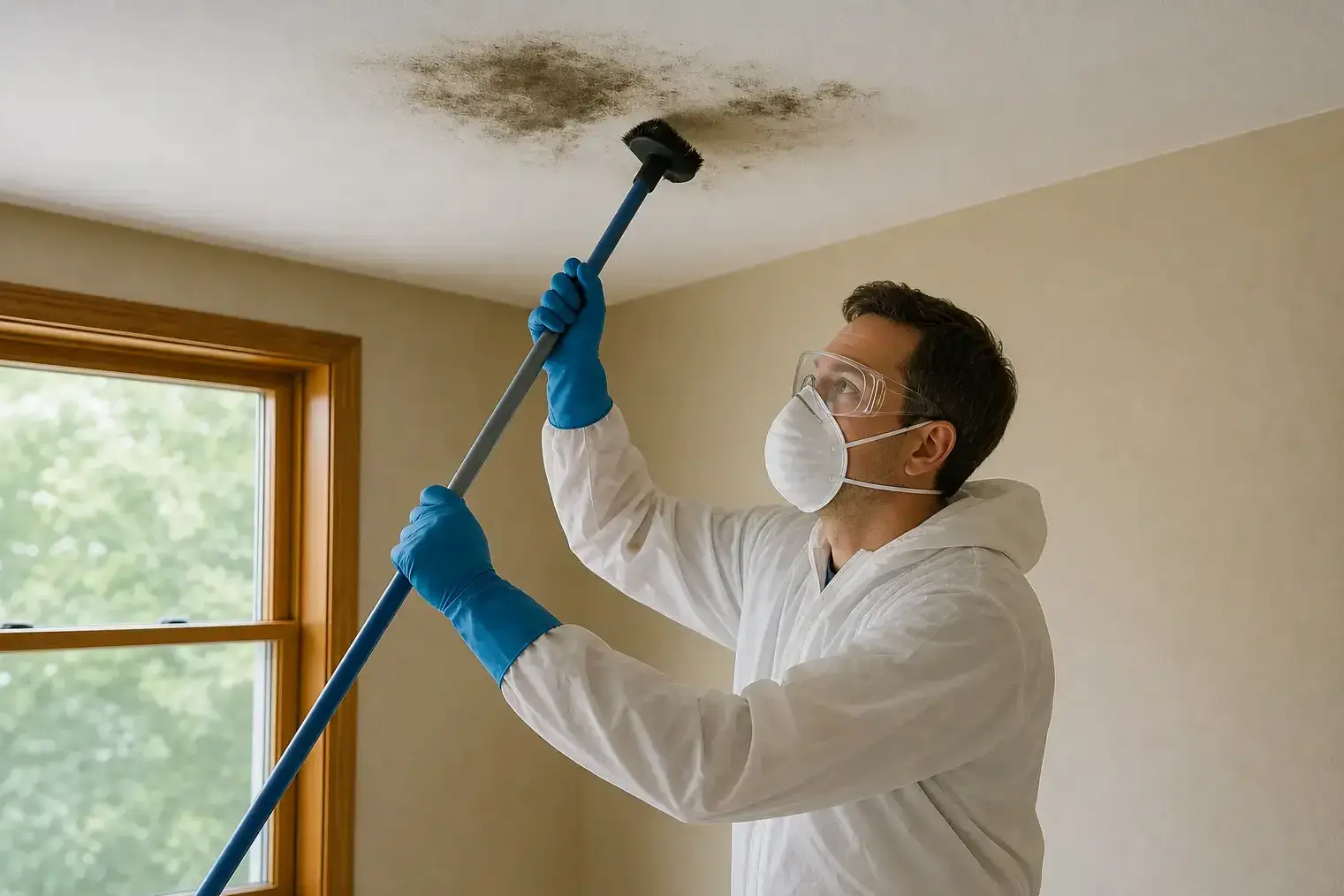
What gets cleaned on a ceiling, and what comes out
The honest answer to “does this come out, or can it be cleaned?” turns on two things — what the material is, and how many square feet are affected. Those are the two axes of the EPA’s own remediation table, reproduced below for the materials usually found on a ceiling.
| Material | Under 10 sq ftabout a cabinet door, or one ceiling tile | 10 to 100 sq ftroughly one wall, or a small bathroom | Over 100 sq ftmore than one room's worth of surface |
|---|---|---|---|
| Wallboardthe ceiling drywall itselfEPA, Table 2 | HEPA vacuum | HEPA vacuumRemove and discard | HEPA vacuumRemove and discard |
| Wood surfacesjoists and framing in the cavity aboveEPA, Table 2 | Wet vacuumDamp wipeHEPA vacuum | Wet vacuumDamp wipeHEPA vacuum | Wet vacuumDamp wipeHEPA vacuumRemove and discard |
What those methods mean, in EPA's words
- Wet vacuum
Wet vacuums are vacuum cleaners designed to collect water. They can be used to remove water from floors, carpets and hard surfaces where water has accumulated.
EPA, cleanup methods- Damp wipe
Mold can generally be removed from nonporous (hard) surfaces by wiping or scrubbing with water, or water and detergent.
EPA, cleanup methods- HEPA vacuum
HEPA (High-Efficiency Particulate Air) vacuums are recommended for final cleanup of remediation areas after materials have been thoroughly dried and contaminated materials removed.
EPA, cleanup methods- Remove and discard
Building materials and furnishings that are contaminated with mold growth and are not salvageable should be double-bagged using 6-mil polyethylene sheeting.
EPA, cleanup methods
Removed and replaced, whatever the area
- Ceiling tiles — drop-ceiling or acoustic tiles.
Discard and replace.
EPA, Table 1This is the action EPA's water-damage table gives for ceiling tiles. It is the one material here with no size threshold to weigh. - Fiberglass or other insulation — any insulation sitting on top of the ceiling.
Fiber glass, or any other insulation material that is wet or visibly moldy (or if an unacceptable odor is present) should be removed and replaced by a qualified heating and cooling system contractor.
EPA, air duct cleaningEPA states this in its heating-and-cooling guidance and it is quoted here as written. Its water-damage table reaches the same conclusion for both fiberglass and cellulose insulation.
These guidelines are for damage caused by clean water. If you know or suspect that the water source is contaminated with sewage, or chemical or biological pollutants, then Personal Protective Equipment and containment are required by OSHA.
EPA, Table 1Porous materials that are wet and have mold growing on them may have to be discarded.
EPA, cleanup methodsMold can grow on wood, drywall, carpet and furniture if they remain wet for more than 24 hours.
EPA, flood cleanup
Ceiling mold nearly always means water arriving from above — a roof, a supply or waste line, or a bathroom on the floor above. The ceiling is the symptom, so cleaning it without finding the source buys a few months at most. Drop-ceiling tile is the one material here with no decision to make: EPA's water-damage table lists it as discard and replace.
Arlington gets around 17 days a year with an inch or more of rain, most of them in April — and a downpour finds a flashing or a seal that a drizzle never would.Source: NOAA 1991-2020 Climate Normals, MEMPHIS WFO, TN US station (14 mi from Arlington)
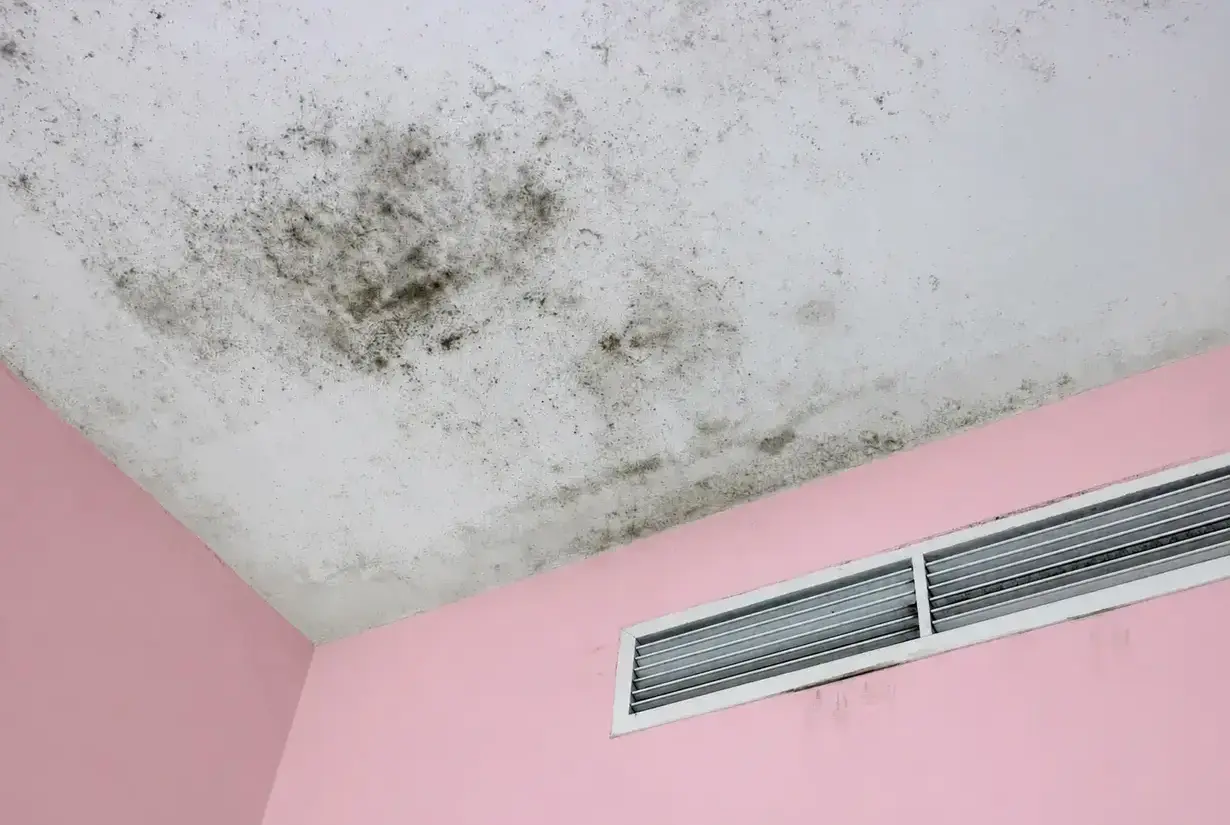
Ceiling Mold Removal Services for Arlington Homeowners
Arlington's subtropical humidity creates persistent indoor moisture challenges year-round, and ceilings are often where that moisture problem becomes visible first. Poor ventilation in crawl spaces—a common construction feature in the area—allows moisture to rise into the home's upper levels, where it collects in attics, around roof penetrations, and within ceiling cavities. Once mold takes hold in these spaces, it can spread quickly and affect the structural integrity of framing and insulation while compromising indoor air quality throughout the home.
Cole Mold Remediation connects Arlington property owners with local independent providers who specialize in ceiling mold removal. These professionals begin with a thorough inspection to identify the full extent of the problem, locate the moisture source driving it, and contain the affected area to prevent spore spread during removal. Once the mold is safely removed, the focus shifts to addressing the underlying moisture issue so that mold is less likely to return. Whether your ceiling mold issue is in a newer subdivision like Watermark or in an established neighborhood, the goal is to restore your indoor environment and protect your home's long-term health.
Why Arlington Property Owners Choose Cole Mold Remediation
Fast Local Ceiling Mold Removal
Cole Mold Remediation connects you with independent local providers who respond quickly to ceiling mold concerns. Fast turnaround means less time worrying about moisture damage spreading through your home.
Ceiling Mold Removal Done Thoroughly
The independent providers in our network handle ceiling mold removal with care for containment and safe removal. Thorough work protects your indoor air quality and prevents regrowth in treated areas.
Clear Communication Throughout Removal
Direct communication with local ceiling mold removal specialists keeps you informed at every step. Understanding the scope of work and next steps builds confidence in the process.
Ceiling Mold Thrives in Arlington's Humidity
Year-round moisture in Arlington's subtropical climate creates ideal conditions for ceiling mold, especially in homes with poor ventilation. Prompt removal by local providers prevents moisture from settling into structural areas and creating deeper problems.
How The Ceiling Mold Removal Process Works
Schedule Your Ceiling Mold Removal Visit
Contact Cole Mold Remediation to describe ceiling mold you've spotted in your Arlington home. We connect you with a local inspection provider who schedules a time to assess the extent of ceiling mold and identify moisture sources driving its growth.
Professional Ceiling Mold Assessment
The independent local provider inspects your ceiling mold, documents affected areas, and traces moisture patterns—critical in Arlington's humid climate, where elevated indoor moisture year-round creates persistent conditions for ceiling mold to develop. They explain findings and outline a removal plan tailored to your ceiling's condition.
Ceiling Mold Removal and Moisture Control
The provider removes ceiling mold using appropriate containment and remediation methods, then addresses underlying moisture to reduce the risk of ceiling mold returning. Follow-up guidance helps you maintain drier indoor conditions and monitor your ceiling going forward.
Dealing with Ceiling Mold Removal in Arlington? Get fast, professional help.
Call Now — (901) 599-2566Ceiling Mold Removal Across Arlington Neighborhoods
Arlington's humid subtropical climate creates persistent indoor moisture conditions that extend well beyond seasonal storms. Year-round humidity levels keep attics, upper-wall cavities, and ceiling spaces naturally vulnerable to mold growth, since warm, moist air rises and concentrates in these zones. Ceiling mold often develops quietly in poorly ventilated attic spaces where condensation accumulates steadily, making regular inspection and prompt removal critical to prevent structural damage and protect indoor air quality throughout your home.
Many Arlington properties rely on crawl-space construction, and inadequate ventilation in those spaces compounds the humidity challenge indoors. When crawl-space moisture rises through walls and into ceiling cavities—particularly in older, established neighborhoods like Belle Terre and Chapel Woods—mold colonizes framing, insulation, and drywall overhead. Newer subdivisions may face similar risks if attic ventilation falls short of local climate demands. Identifying and removing ceiling mold early prevents it from spreading into HVAC systems and living spaces. Cole Mold Remediation connects Arlington property owners with local independent providers who assess ceiling conditions and design removal strategies tailored to your home's construction and moisture patterns.
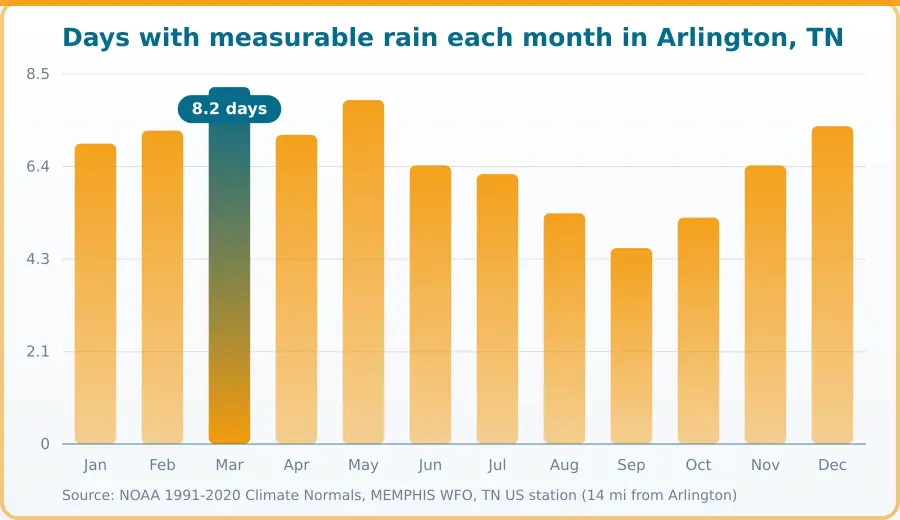
| Period | Days with measurable rain by month (days) |
|---|---|
| Jan | 6.9 |
| Feb | 7.2 |
| Mar | 8.2 |
| Apr | 7.1 |
| May | 7.9 |
| Jun | 6.4 |
| Jul | 6.2 |
| Aug | 5.3 |
| Sep | 4.5 |
| Oct | 5.2 |
| Nov | 6.4 |
| Dec | 7.3 |
Source: NOAA 1991-2020 Climate Normals, MEMPHIS WFO, TN US station (14 mi from Arlington). Retrieved October 5, 2026.
Seasonal Ceiling Mold Removal Challenges in Arlington
Spring: Rising Moisture
Spring warming in Arlington brings increased indoor humidity as temperatures fluctuate and moisture accumulates in enclosed spaces. Ceiling mold often becomes visible as dormant spores activate with added moisture. Cole Mold Remediation connects property owners to local providers who inspect ceilings early, identifying growth before it spreads deeper into framing and insulation.
Summer: Persistent Indoor Humidity
High humidity throughout summer months keeps moisture levels consistently elevated indoors, making ceilings in areas with poor ventilation—particularly common in Arlington's crawl-space homes—prime locations for active mold growth. Ceiling mold thrives in this environment and spreads rapidly. Cole Mold Remediation helps property owners connect with local providers who assess ventilation issues and perform targeted removal to stop summer-long colonization.
Fall: Settling and Transition
As temperatures cool in fall, moisture that accumulated during humid months often condenses on ceiling surfaces and in attic spaces, reactivating mold dormancy. Ceiling mold growth may accelerate as homes shift between seasonal heating and cooling cycles. Cole Mold Remediation links property owners to local providers who assess ceiling damage before winter arrives and address moisture sources preventing fall mold establishment.
Winter: Temperature Gaps and Condensation
Winter heating creates temperature differences between interior and exterior, causing condensation to form on cold ceiling surfaces—a direct driver of ceiling mold growth in poorly insulated spaces. Indoor heating also concentrates moisture in enclosed areas where air circulation is limited. Cole Mold Remediation connects property owners to local providers who identify condensation-prone ceilings and recommend removal and moisture-control strategies for winter protection.
Related Services
Ceiling Mold Removal FAQs — Arlington, TN
Ceiling mold removal begins with inspection to identify affected areas and moisture sources. The local provider will contain the work area to prevent spore spread, remove contaminated materials, dry the space thoroughly, and treat surfaces. The goal is safe, complete removal while identifying why moisture accumulated so it doesn't return. Your provider will explain each step before starting.
Cole Mold Remediation connects you with independent local providers in Arlington who can typically respond to requests promptly. Exact timing depends on current workload and your specific situation. Contact us with details about your ceiling mold concern, and we'll connect you with an available provider who can discuss their schedule and next steps.
Ceiling mold removal pricing depends on the affected area's size, material type, how deep mold has penetrated, and what moisture work is needed. Accessibility and whether structural repairs are necessary also matter. The independent provider you're connected with will assess your specific situation and discuss pricing details before work begins.
Before removal begins, your provider will explain containment procedures and any areas you should avoid. Clear the space below the affected ceiling if possible. Discuss whether you need to vacate during work—this depends on the scope and materials involved. Your provider will give you specific instructions based on your home's layout and the mold's location.
After removal, controlling indoor moisture is key. Monitor humidity levels, ensure proper ventilation in bathrooms and kitchens, and fix leaks quickly. In Arlington homes, addressing crawl space ventilation and managing ground moisture helps reduce the moisture that feeds ceiling mold. Your provider can suggest specific steps for your home's situation.
Arlington's humid subtropical climate means moisture levels stay elevated throughout most of the year, not just seasonally. This persistent indoor humidity, combined with poor ventilation in crawl spaces common to area homes, creates ideal conditions for mold growth on ceilings. Inadequate air circulation allows moisture to settle and accumulate, making ceiling mold a recurring concern for local property owners.
Homeowner Safety Toolkit
Verify Your Arlington, TN Mold Remediation Company
Before you hire anyone, use these independent national resources to confirm credentials, standards, and track record.
EPA
The federal government's own guidance on identifying, cleaning up, and preventing mold growth in a home.
Mold Prevention GuideACAC
An independently accredited certifying body for mold inspectors and consultants — one of the few in this field whose standards are verified by an outside accreditation board, not just self-declared.
Find a Certified InspectorIICRC
Publishes the S520 standard for professional mold remediation. Confirm a company's technicians hold real, current IICRC certification before you hire them.
Verify CertificationDealing with Ceiling Mold Removal in Arlington, TN? Call (901) 599-2566 for 24/7 help.
Call Now — (901) 599-2566Areas We Serve in Arlington, Tennessee
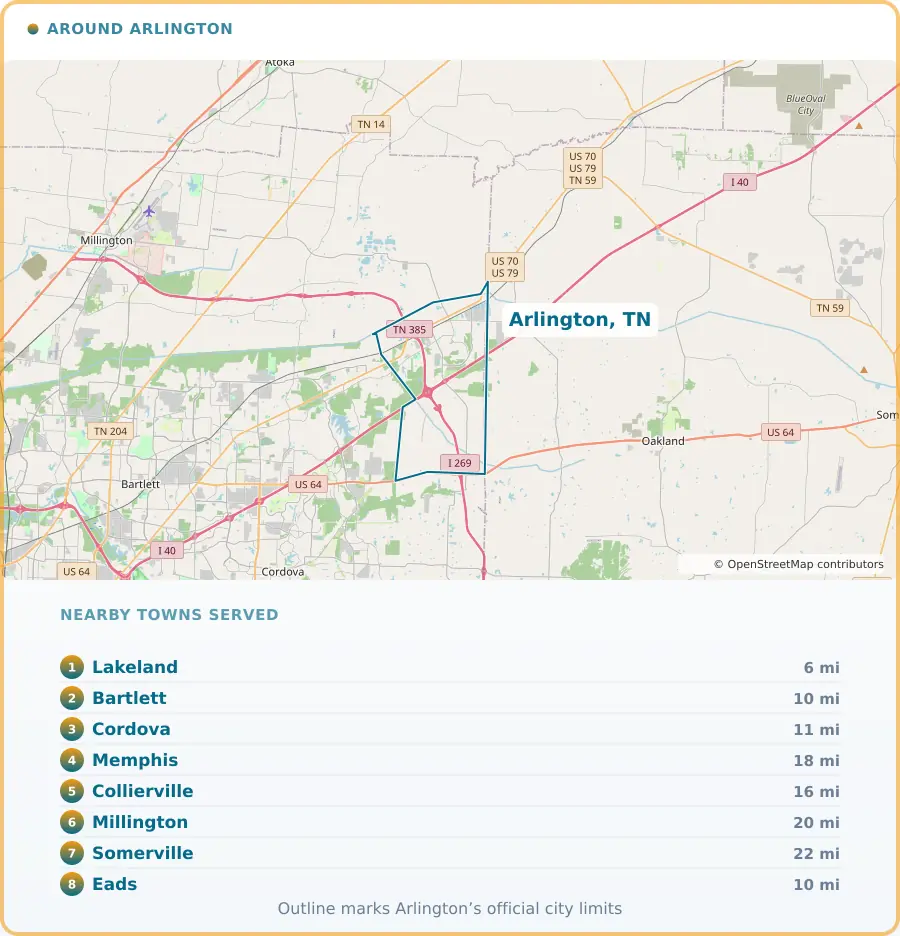
Arlington, TN is the centre of the service area, which extends to 8 surrounding towns. The map shows how far that reaches.
Arlington, TN Information
Arlington, TN sits just outside Memphis, and that closeness shows in everything from its steady stream of new rooftops to the trucks rolling through on their way to the region's logistics and distribution hubs. With roughly 14,500 residents, the town has grown from a quiet crossroads into one of the area's liveliest suburbs, where newer neighborhoods like Chapel Woods and Watermark keep expanding alongside longstanding pockets like Davies Plantation.
The local economy runs on a practical mix: homebuilders and retailers such as Kroger, Walmart, and Lowe's, banks like First Horizon and Regions, and the schools and healthcare employers that keep families rooted here. Easy access to Memphis has made Arlington an appealing place to settle without losing its small-town pace.

Photo: Billy Hathorn, CC BY-SA 3.0